
Networking and personal meetings as the foundation of business

Trust is built in person
Over 20 years in IT have taught me a simple rule: expertise alone is not always enough to successfully deliver a software solution for a client. Nowadays, having ad campaigns and references from past work is simply not sufficient. Clients are not just looking for a technical partner—they are looking for a partner they know personally.
Business, especially at the start of a collaboration, is built 90% on personal relationships.
Why an IT company can’t operate only online
Modern online operations have incredibly accelerated progress, business, development, and the entire world. Even so, I have long been skeptical of fully online operations. Especially in the initial phase of a project, when we need to understand how the client operates, what solution to design, and what challenges companies face in digitalization, personal, offline contact is more than just helpful–it is essential.
It’s important to remember that speeding up time hasn’t changed how the human mind works, how business works, or how problem-solving works. The concept of trade dates back to around 80,000 BCE. Even then, business was conducted through barter—I deliver something and receive something in return: a sheep, a building stone, a pile of sand… anything.
The beginnings of business, whether through barter or later forms of systematic exchange, have ingrained in our minds how trade functions. Even though we no longer trade sheep for software, the human mind still works in the same way.

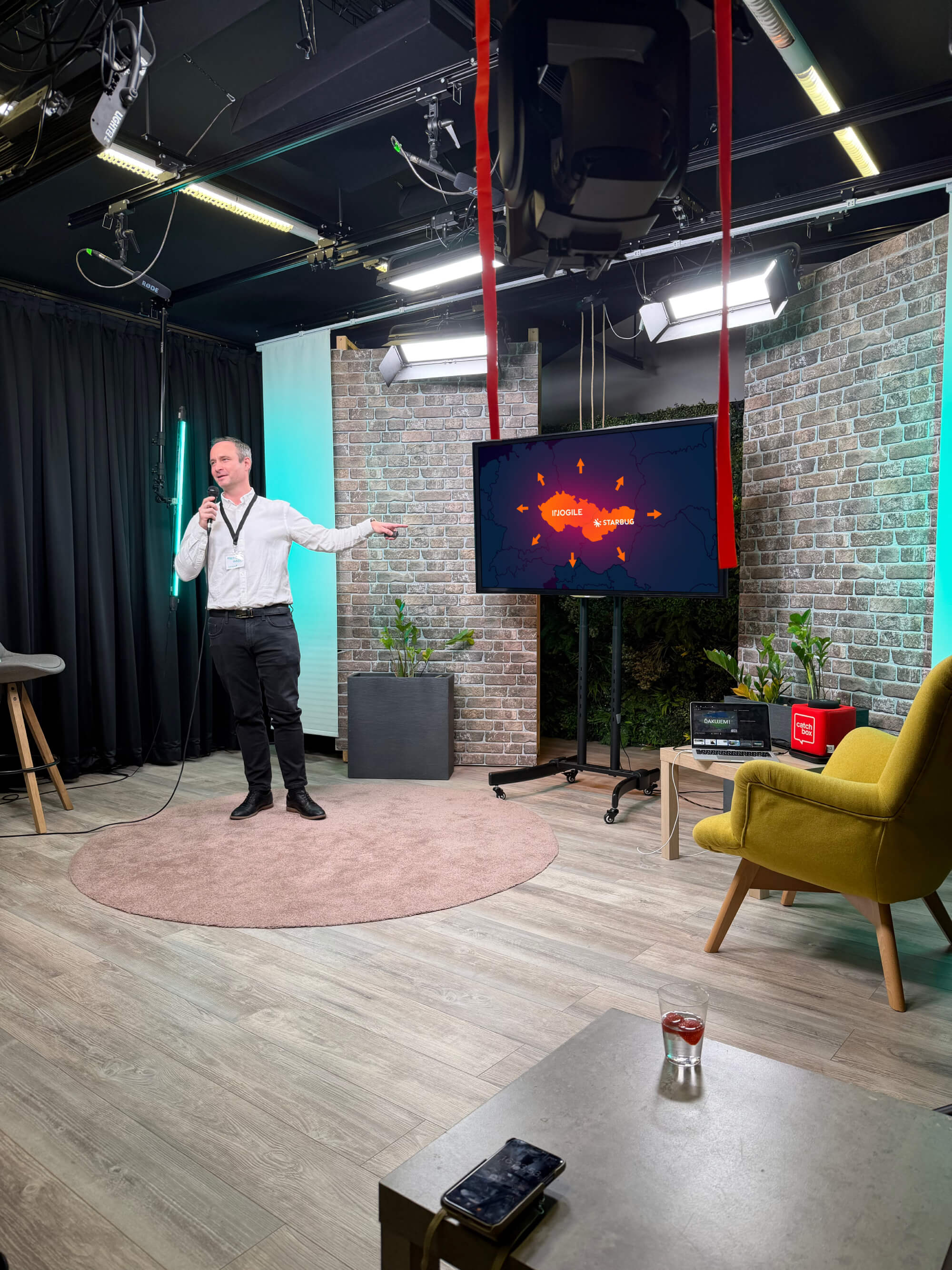
Online vs. Offline Communication
Online communication, even though it is a simple and fast channel, cannot convey all the emotions and openness between the parties involved. The camera may fail, the sound may glitch, the client may feel uncomfortable, or the conversation may be interrupted by a mobile phone, among many other issues.
Let me outline a few points that I see as the advantages of offline communication compared to the online world when discussing a future software solution.
Online communication, web call | Offline communication, in-person meeting | |
|---|---|---|
Time | Click on a link | Traveling, transportation costs, and possibly accommodation |
How long the meeting lasts | Short, only the minimum required is discussed | Usually a long meeting where the project is discussed in full detail. In the case of an offline meeting, people usually do not plan other activities for that day. |
Building trust | Mostly no small talk, only concrete matters are discussed. There is little space to get to know each other personally. | The conversation usually starts with small talk, allowing the parties to get to know the company and each other on a personal level, which significantly helps communication. |
Meeting notes | Both parties usually take notes | Both parties usually take notes |
How deeply the project is discussed | Online calls are shorter and the project is not discussed in depth, which is a major problem when estimating and understanding the full solution | The project is discussed in full detail. Often solutions emerge that can improve the project in the future or prevent potential problems. |
Site visit | Drawings are sent, which do not reflect the real situation | For the digitalisation of manufacturing companies, even an IT company needs to understand the client’s actual physical spaces. |
Success in closing the deal | Significantly lower. Statistically difficult to measure, but keep in mind that everyone does online calls today | The conversion rate of closing the deal is significantly higher. Despite the effort and costs of travel, you can show the client that you care about the project and demonstrate your expertise in person. |
Memorability | The next day after an online call, the client may not even remember who you are or what you look like | Whether the cooperation is closed or not, the client will subconsciously remember you. If you are an expert in your field, they will remember that as well. |
The conversion between offline and online meetings is relatively difficult to measure, but in any case, face-to-face meetings clearly come out ahead. It’s not just because the client dedicates more time to you, but also because you can directly address real problems that digitalization or software solutions need to solve.
A key question is whether face-to-face meetings are necessary for very small projects, where development time is short and the solution cost is negligible. Logically, the answer is usually no—they are not necessary. However, it’s important to keep one fundamental point in mind: even the biggest businesses started small, and it ultimately comes down to personal intuition to assess whether a given project might grow into a large, long-term collaboration.
Do we need to operate in person in 2026?
I don’t know about others, but for me, the answer is definitely yes. A client is not just a business partner we collaborate with on IT projects—very often, it’s also a person I want to meet in person.
I do not question that other companies may operate differently.
"IT practice and personal experience have convinced me that critical solutions are built at the table, not over a web call."
More articles


Why Building Software Is Like Building a House (And Why Most People Underestimate the Process)
Interview with our CEO for the Startitup portal
2026-04-14 | AI / LLM
Why Your Corporate Data Isn’t Safe in AI (And What to Do About It)

Martin Jurek
CEO, Inogile
2026-04-01 | Information Systems | INOGILE
Why Building Software Is Like Building a House (And Why Most People Underestimate the Process)
Martin Jurek
CEO, Inogile
2026-01-16 | INOGILE
Networking and personal meetings as the foundation of business
Martin Jurek
CEO, Inogile
2025-11-24 | INOGILE | AI / LLM
Interview with our CEO for the Startitup portal
Martin Jurek
CEO, Inogile

2025-04-15 | AI / LLM
Overview of AI Tools for Streamlining Work
Martin Jurek
CEO, Inogile

2025-04-12 | AI / LLM | Information Systems | Mobile Applications
What is vibecoding – and why it 'doesn’t work'
Martin Jurek
CEO, Inogile

2025-04-10 | INOGILE
Summer Company Event 2025 / When Programmers Hit the Ranch
Martin Jurek
CEO, Inogile

2024-12-20 | INOGILE
INOGILE / Starbug is expanding into the Czech Republic
Martin Jurek
CEO, Inogile


